What If It’s Not Autism… Yet Still Needs Support?
You’re not imagining it.
If you're a parent who has ever sat in a pediatrician's office, only to be told, “Let’s wait and see,” even though your gut is saying something’s not right, this post is for you.
Maybe your child isn’t meeting milestones.
Maybe they melt down in public places, or cover their ears at every sound, or refuse to eat more than five foods.
But no one’s said the word “autism.” And maybe they never will.
That doesn’t mean your child doesn’t need, or deserve, support.
“I don’t treat diagnoses. I treat the child in front of me.”
– Dr. Shelley Margow
Let’s talk about what to do when your child doesn’t have a label… but you know they’re struggling.
Trusting Your Gut Isn’t Overreacting, It’s Parenting
First, let’s clear this up:
You are not being “dramatic.”
You are not “trying to label your kid.”
You are not overthinking.
You are noticing what your child is trying to tell you… through their behavior, their nervous system, and their patterns.
Whether or not a child receives an official diagnosis, their body still communicates in real ways:
Through meltdowns
Through withdrawal
Through seeking movement or pressure
Through avoiding loud noises or bright lights
Through struggling to transition or follow directions
You don’t need a diagnosis to recognize that something is dysregulated.
And you don’t need a diagnosis to begin supporting them.
Labels Are Helpful for Systems, But Support Can Begin Without One
A diagnosis can help unlock services in school systems or insurance companies, but it’s not the only starting point.
In fact, many families I’ve worked with waited years for answers, and in the meantime, their child’s nervous system continued to struggle without tools.
That’s why I developed frameworks and tools that work regardless of diagnosis.
Because at the end of the day, what matters isn’t the label, it’s the needs beneath the label.
Three Early Strategies That Support Regulation, Connection, and Growth
Here are three simple, sensory-informed steps you can take now, no diagnosis required.
1. Watch for Patterns, Not Perfection
Start observing what’s consistent in your child’s environment when big behaviors show up.
Ask yourself:
Does this happen in crowded places?
Around loud sounds or certain textures?
During transitions or unstructured time?
You’re not looking for the perfect answer, you’re looking for patterns that give you clues about their sensory world.
2. Add Structure Without Adding Stress
Neurodiverse kids often thrive on predictability. You can add simple structures to your day that help reduce overwhelm:
Use visual schedules or picture charts
Create calm-down routines with music, pressure, or movement
Give a 2-minute warning before changing acivities
You’re building a bridge between their nervous system and the world; not forcing them to comply, but helping them feel safe in the flow of the day.
3. Lead With Connection, Not Control
Behavior is never just behavior.
It’s communication.
Children who don’t have the language or self-awareness to say “I’m overwhelmed,” will often show it through:
Refusal
Meltdowns
Withdrawal
Avoidance
When you shift from managing behavior to understanding the need behind it, everything softens.
You’re no longer the “bad guy” enforcing rules. You become the guide helping them navigate their world.
And that… changes everything.
You Don’t Need to Wait for the System to Catch Up
I’ve seen too many parents waste precious months (or years) waiting for “enough symptoms” to qualify for a diagnosis.
Meanwhile, their child struggles daily, and so do they.
The good news is: you don’t have to wait.
Support can begin today, with tools that honor your child’s unique wiring, build emotional safety, and reduce family stress.
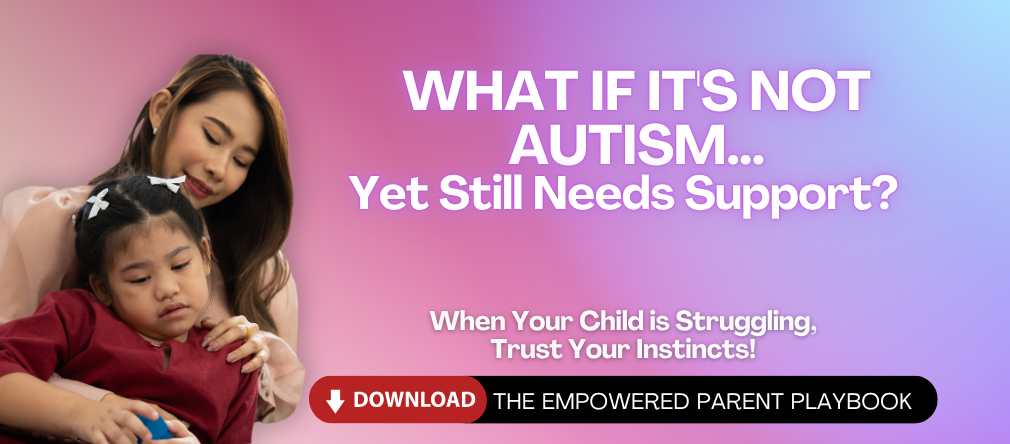
Download the Empowered Parent Playbook Preview
Inside, I’ll walk you through three powerful tools you can start using today, based on over 30 years of clinical experience, and designed to work whether or not your child has a diagnosis.
You’ll learn how to:
Decode behavior through a sensory lens
Set up your home to support regulation
Shift from survival mode to connection
No gatekeeping. No jargon. Just real help for real families.
You know your child best.
Let’s build from that truth.